
Newsletter
November 3 Newsletter
This week: three stories in Allegedly…, Nelson in Objection, a Sidebar on why a federal judge threw out Ann Altman's lawsuit against
Jocelyn Stewart has been training to be a trial lawyer since her freshman year of high school on the mock trial team. She knew then she was destined to be a trial lawyer. Service as an Army prosecutor, defense counsel, special victims prosecutor, and civilian defense culminated in jury experience that few in the nation have. Listen to her stories, hear her passion, learn, and be captivated.
New · Know Your Judge
For years, sizing up a military trial judge meant asking around. Now there’s data: every court-martial they presided over, how cases were pleaded and decided, the sentences they imposed, and appellate reversals.
 Write Books: My Legacy Is Who I Teach
 “Because You’re Boring”: Finding Your Voice
 Values Over Flash: Picking Your Marketing Team
 One of Two Lawyers in a Room of 300 Marketers
 A TikTok LIVE Watch Party
 Batch Recording (and the Spreadsheet Mug)
 “Boy, Was I Wrong” About TikTok
 Lead With Your Resume and We’re Not Friends
 Don’t Lawyer at People
 The Hard Conversation First (Day One: Vision and Purpose)
 Train Myself Out of a Job
 Even the Wins Need Analysis
 “How Are You Handling This?”
 No Pictures in Uniform
 Why “Messy Military Lawyer”
 Finding My Voice for the Top 12 Cases Book
 TikToks in JAG Professional Development
 Explaining Aiding and Abetting, and What Came After
 Three Videos a Day for 30 Days
 Bookends: Voir Dire and Instructions
Military defense attorney Jocelyn Stewart finishes her breakdown of Hulu's three-part docuseries Swipe Right on the Devil, about the 2017 killing of Sydney Loofe in Nebraska. She walks through the mistakes by Aubrey Trail and Bailey Boswell that investigators used to build the case, from a burner phone and a Tinder account left on during the drive to dispose of evidence, to Facebook videos, coded jail notes and a cipher that was never destroyed.
She explains the false exculpatory evidence instruction, why deleting a phone can be used as consciousness of guilt, what her research found about deals for the women who testified, Trail's post-conviction filings, Boswell's appeal over the witchcraft evidence under Rule 404(b), and a judge's lesson on mitigation evidence: "What is the therefore?"
CBS News and NBC News have reported on the Sydney Loofe murder case.
Her law firm's website explains how a service member can speak to the sentencing authority at a court-martial in its guide to unsworn statements at court-martial sentencing.
Military defense attorney Jocelyn Stewart breaks down the first episode and a half of Hulu's three-part true crime docuseries Swipe Right on the Devil, about the 2017 disappearance of Sydney Loofe, a 24-year-old Lincoln, Nebraska, woman who went missing after a second date with a woman she had matched with on Tinder.
Drawing on her experience as a former prosecutor, defense attorney and part-time magistrate, she explains what makes a legal conspiracy and why "it was just words" can matter, the difference between a confession and an admission, why the police approach to Aubrey Trail looked more like hostage negotiation than interrogation, and the limits of cell tower data.
CBS News and NBC News have reported on the case, including the trial of Aubrey Trail, who was sentenced to death in 2021 for killing Sydney Loofe.
Her law firm's website has a guide for service members who are contacted by military investigators: what to do when CID, NCIS or OSI wants to interview you.
Military defense attorney Jocelyn Stewart looks at the federal court ruling that dismissed, with prejudice, the civil lawsuit Ann Altman filed against her brother, OpenAI CEO Sam Altman, alleging years of childhood sexual abuse. Sam Altman has denied the allegations. The headlines said the case ended because she refused a mental health examination, so Jocelyn pulled the court filings to see what actually happened.
She walks through what she found: a stipulation in which both sides agreed to the examination, and the judge's findings about three missed examinations, unanswered and unverified interrogatories, missed deadlines and violated court orders. She also explains how Federal Rule 35 examinations work, and how the same question plays out in military courts, where a judge generally cannot order a complaining witness to undergo a mental health examination.
Forbes has reported on the judge's dismissal of the lawsuit.
Her law firm's website also explains how to survive sexual assault allegations.
The short version in the news was that the case ended because Ann Altman would not attend a mental health examination. Jocelyn went into the federal court record expecting to find a contested fight over that examination. According to the filings she reviewed, that is not what happened.
A case dismissed "without prejudice" can usually be filed again later. A case dismissed "with prejudice" cannot. As Jocelyn puts it: "With prejudice means you can't bring it again. You don't get to take a timeout and try to bring it again. You're done."
In the same order, the judge granted Sam Altman's request to drop his own counterclaims without prejudice, on the condition that her case was dismissed. Other pending motions on the substance of the claims were denied as moot.
Federal Rule of Civil Procedure 35 allows a court to order a party in a civil lawsuit to undergo an independent mental or physical examination. Two things have to be shown: the person's condition must be "in controversy," and there must be "good cause."
In plain terms, Jocelyn explains, a mental health examination is not the usual next step when someone simply says a defendant caused them emotional distress. Courts also look at whether other discovery, such as treatment and counseling records, would be an adequate substitute. When these exams are contested, a judge has to make specific findings on those questions.
Jocelyn expected to find a defense motion asking the court to force the exam, an opposition from Ann Altman, and a judge's ruling that there was good cause. Instead, she found a joint stipulation (Doc. 89 in the court record) in which both sides agreed the examination would go forward. Because of that agreement, the judge never had to decide whether there was good cause.
According to the order by U.S. District Judge Zachary M. Bluestone of the Eastern District of Missouri (Altman v. Altman, No. 4:25-cv-00017), Ann Altman then failed to appear for the examination three times. The order also describes interrogatories that were not answered or verified, missed deadlines including expert disclosures, requests for documents that were not met, and violations of multiple court orders. The judge found these failures willful, noted repeated warnings that dismissal with prejudice was the likely result, and gave two separate grounds for dismissal: Federal Rule of Civil Procedure 37(b)(2)(A) and Rule 41(b).
Sam Altman has denied the allegations. The dismissal was based on how the case was litigated. No court decided whether the allegations themselves were true.
In military courts, the question works differently. Under a case Jocelyn discusses, United States v. Owen, 24 M.J. 390 (C.M.A. 1987), a military judge generally lacks the inherent authority to compel a complaining witness to undergo a mental health examination.
In the members section, Jocelyn walks through what the court's order says step by step, and tells the story of a court-martial where she used that same military case to win her motion.
Topics: Sexual Assault & Misconduct Allegations · Military Judges
From public court-martial records:
Military defense attorney Jocelyn Stewart talks about hazing deaths on college campuses and in the military, starting with the recent sentencing of a former Northern Arizona University fraternity leader after a pledge died of alcohol poisoning. She then goes back to Germany in 2006, when two soldiers died in hazing rituals fewer than six months and 60 miles apart: one in a Prince Hall Masonic initiation in Mannheim, where no one was prosecuted, and one in a Gangster Disciples initiation, which she prosecuted.
She explains why a person cannot legally consent to an aggravated assault, why she was not allowed to charge felony murder, how the Air Force and Army rules on gang membership differed, and why she believes hazing deaths are still treated differently depending on who is doing the hazing.
CBS News and NBC News have reported on the Northern Arizona University sentencing.
Jocelyn Stewart's law firm also defends service members stationed overseas. Read more about her work as a military defense lawyer for service members in Germany.
When someone dies in a hazing ritual, one of the first defenses people reach for is that the victim agreed to it. He knew it was coming. He showed up. He drank voluntarily. In this episode, Jocelyn explains why, in her experience as a prosecutor and defense lawyer, that argument does not hold up once a beating becomes an aggravated assault.
Jocelyn's answer is no, not when the hazing amounts to an aggravated assault. She points to a 1997 military appeals case, United States v. Bygrave, 46 M.J. 491 (C.A.A.F. 1997), in which the court noted that lack of consent is not an element of aggravated assault. In other words, the government does not have to prove the victim objected.
"A person cannot, as a matter of law, consent to an aggravated assault," she says. In her view, military law is very clear on this, and civilian law is the same in every jurisdiction she has seen.
That is why she calls the reasoning given in one 2006 Army case, that the soldier had "consented" to the paddling, double talk.
The difference between a simple assault and an aggravated assault, Jocelyn explains, is the force or means used. The question is whether it was likely to cause death or grievous bodily harm.
One punch from an ordinary person generally will not get there. A weapon, such as a knife or a gun, often will. So can a sustained beating. Either way, she notes, proving it is going to require medical evidence.
Jocelyn walks through two of the options a prosecutor has when a hazing ritual ends in a death:
The difference is large, both in how the offense is alleged and in the punishment. In the case Jocelyn prosecuted, she says, felony murder would have carried a potential sentence of up to life without parole.
She also explains why a prosecutor might charge the underlying aggravated assault alongside the homicide: so that if the fact-finder is not convinced the beating caused the death, the assault itself can still be proven.
This is general education about how these cases work, not legal advice about any particular situation.
The members section covers the case she prosecuted, why she was told she could not charge felony murder, and how the defense chose to fight it.
Topics: Hazing & Homicide · Murder & Homicide Cases
From public court-martial records:
Military defense attorney Jocelyn Stewart continues her October 17 TikTok LIVE: how trial lawyers are made, the first trial that hooked her as a law student, studying Colonel Mike Mulligan's transcripts, why watching a trial on camera isn't the same as sitting in the jury box, and viewers' questions about court-martial data and the cases they want her to look at.
Her law firm's website has a plain-English guide to how a court-martial works, from investigation to appeal.
In the second half of her October 17 TikTok LIVE, Jocelyn talks about how she studies other trial lawyers and then takes viewer questions on court-martial practice. As always on her LIVEs, she does not give personal legal advice. She asks viewers to keep their own details out of the chat and treats the session as general information and education.
A viewer had suggested she was doing something wrong by talking about what happened at a military trial, on the assumption that courts-martial are secret. Jocelyn's answer: "You guys, trials are public. The default is public."
She explains that a court can be closed only for narrow parts of a case. Examples include litigating the prior sexual acts of an alleged victim, records covered by Rule 513 (medical or psychiatric records), and classified or national-security evidence. Once that issue is decided, the court has to reopen. She adds that wrongly closing a part of a trial that should have been public can even get a conviction overturned. In her view, a public trial is about transparency and accountability, and that matters most in military cases.
Jocelyn says some service members worry that a panel will see a paid civilian lawyer as a sign of guilt. Others worry that members will view a civilian as an outsider to "their" system. She takes on both concerns in voir dire. She asks panel members whether they can imagine why an innocent person would hire counsel from outside the military system, and whether anyone thinks she shouldn't be there in her civilian capacity because it's a military case.
She is also blunt about the civilian side of the market. She says some civilian lawyers take the fee and leave the appointed military counsel to do the work. A Navy defense counsel she worked with calls that a "pretrial fine." Her advice is to find out whether a civilian does this as a dedicated practice or just dabbles in it.
In most cases, nothing, and she thinks that is a problem. Unless a judge specifically sanctions the attorney and says the finding is reportable, she says there typically isn't even a requirement for the lawyer to self-report to a state bar. She argues that a finding of ineffective assistance should at least raise a question under Rule 1.1, the duty of competence. She also points out that military counsel, unlike civilians, never have to state on the record where they are licensed.
The members section has the full episode guide, the law school trial that shaped her cross-examination style, and the rest of the viewer Q&A.
Jocelyn follows the Air Force major's case, Maj. Jason Watson, in her TikTok collection Air Force Major in Pretrial Confinement.
Topics: Unlawful Command Influence · Trial Practice & Courtroom Tactics
In this series: October 17, 2026 LIVE, part 2 of 2. Previous: LIVE: TikTok LIVE, October 17, 2026, Part 1
From public court-martial records:
Military defense attorney Jocelyn Stewart goes live on TikTok to talk about the Hasan execution announcement and the more than 100 Fort Hood soldiers who reportedly requested religious accommodation, then takes viewers' questions: the three times she was accused of ineffective assistance of counsel, the Darnall hospital baby-kidnapping case, and the murder case that still haunts her.
CBS News and CNN have reported on the plan to execute Hasan by firing squad.
Read more about Jocelyn Stewart's credentials, trial record and publications on her law firm's website.
Jocelyn Stewart starts this Saturday TikTok LIVE with the latest on the scheduled execution of Nidal Hasan. She spends most of the hour on something defense lawyers rarely talk about in public: what happens when a court-martial client says the defense lawyer was ineffective. As on all her LIVEs, she says this is information only. She does not give personal legal advice on a LIVE.
Ineffective assistance of counsel is a claim, usually raised on appeal, that the defense lawyer's work fell so far below the standard that it was almost as if the accused had no lawyer at all. Jocelyn explains two reasons these claims are hard to win. First, the court judges the defense team as a whole, not one lawyer alone. Second, if an issue wasn't raised at trial, the appellate court generally steps in only when the error is obvious and clear.
When a claim looks serious, the appellate court may hold a hearing where the trial defense lawyers testify. More often, it orders them to answer written questions in affidavits. Lawyers often defend themselves by saying they knew about the issue and made a tactical choice. Jocelyn has faced three of these claims herself, and her advice to other defense lawyers is simple: "If you're a trial defense counsel out there, if you miss something, just own it."
She says that for most of her 24 years, military appellate courts rarely found ineffective assistance. Over the last year or two she has seen a real increase in cases where they do.
The problem that frustrates her most is lost recordings. Recorded interviews, sometimes the alleged victim's very first one, are being deleted, written over or lost. If evidence is lost or destroyed through no fault of the defense, and a fair trial can't be had without it, the defense can file a motion to abate. Jocelyn explains that the judge "shall" abate the case, not "may," until the evidence is recovered. If it can't be recovered, the case stays abated for good. It isn't called a dismissal, but it has the same effect.
She describes a recent appellate opinion where the defense never filed that motion. Instead, the lawyers cross-examined the agent about the lost recording, then told the appellate court that skipping the motion was a tactical decision. In her view, no tactical reason could justify it.
Yes. Through what are called Grostefon matters, a military accused can write directly to the appellate court about issues their appellate counsel chose not to brief. Many ineffective assistance claims, including one against her, reach the court this way.
Below, members get the full episode guide and the story behind each of the three claims made against her.
Topics: Fort Hood Shooting · Unlawful Command Influence · Murder & Homicide Cases
In this series: October 17, 2026 LIVE, part 1 of 2. Next: LIVE: TikTok LIVE, October 17, 2026, Part 2
From public court-martial records:
This week: three stories in Allegedly…, Nelson in Objection, a Sidebar on why a federal judge threw out Ann Altman's lawsuit against
A former UN General Assembly president is being held for 30 days in the Maldives on suspicion of child sexual abuse, which he denies. What a remand is, and what it is not.
Lindsay Clancy's first murder trial ended in a hung jury. Her lawyers now say a retrial would be double jeopardy. Here is how that argument works in Massachusetts.
Cornell has banned fraternity parties for the year and promises immediate suspension for any chapter that breaks the rule. How a chapter case differs from a student's own Title IX case, and what members should know before they talk.
Russell Brand's barrister told jurors the six women's accounts were contaminated by 2023 media reports. How English law decides whether multiple accusers can support each other, and how U.S. and military courts differ.
A jury awarded David Sabatini $6 million and his former colleague's lawyer says she will appeal. Here is how a Massachusetts verdict is challenged, step by step.
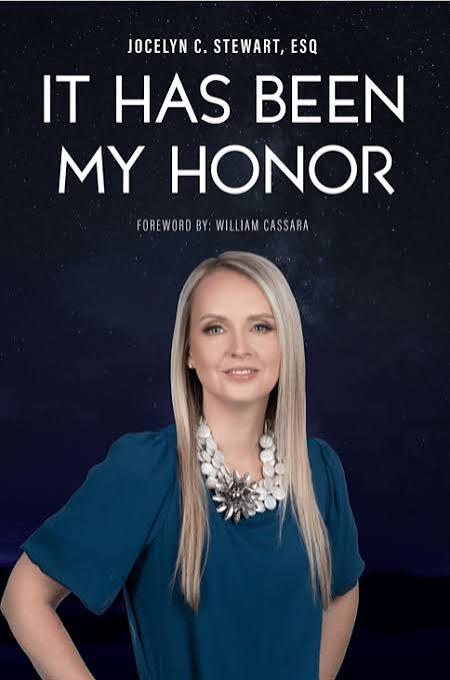
Book
Twelve of her most significant cases. Foreword by William Cassara.
+ $4.95 S&H
Coming soon
One email when it’s out.
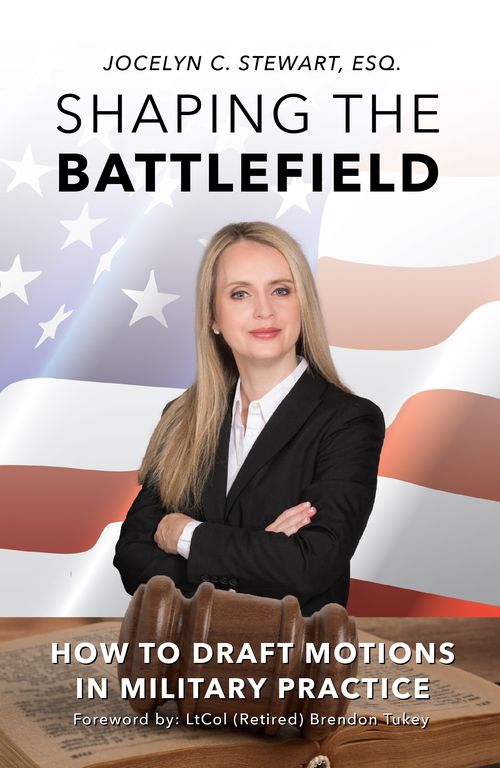
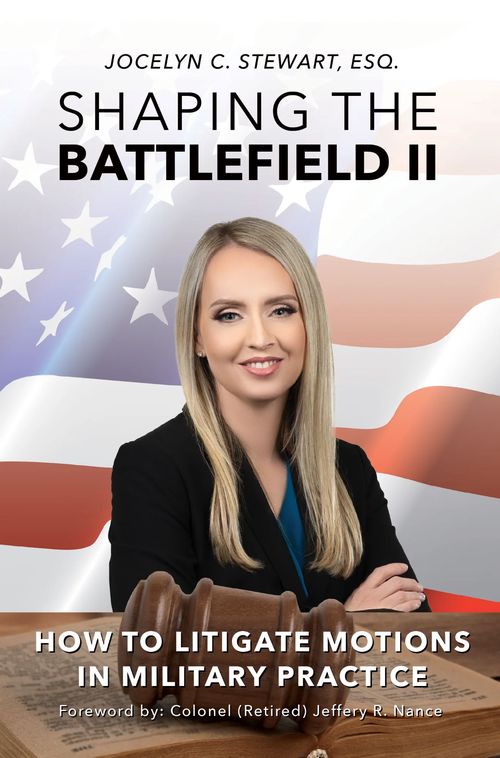
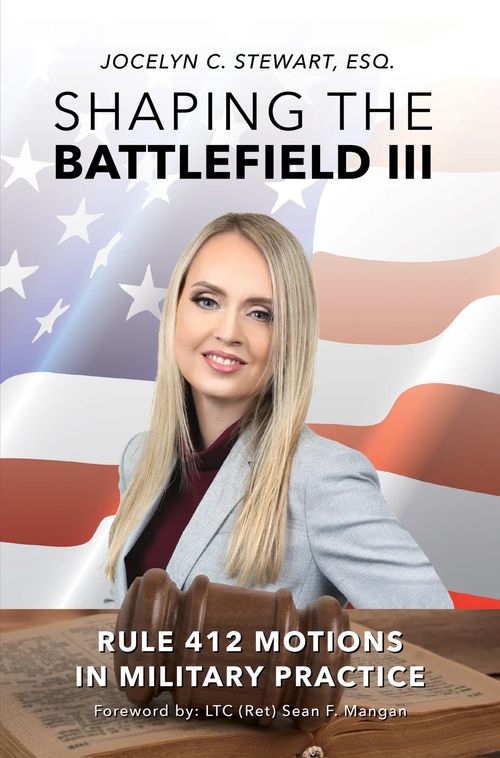
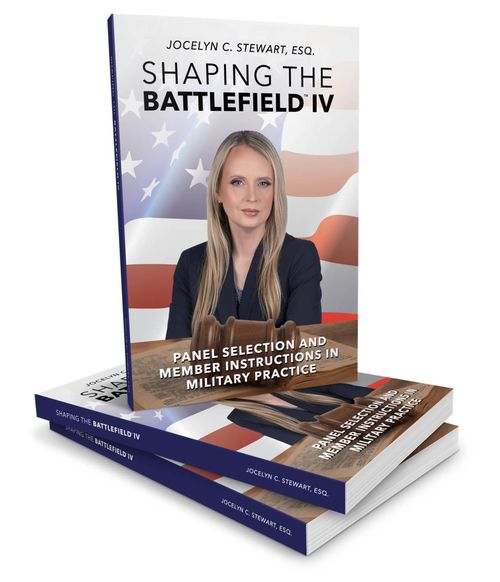
Print copies shipped in the US from the law office. Signed copies are $5 more per book. Shipping & handling $4.95 per order, free on the four-book set. Buying for a team or class? Pick the quantity at checkout. Undertakers get signed copies at a discount.